The Influence of a Warm-Up on Vigilance in University Students
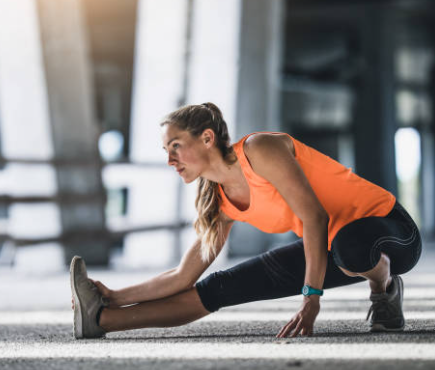
The present study aimed to analyze the effects of conducting a warm-up (WC) or not (WWC) on students of the Science Degree in Physical Activity and Sport before starting a practical class. Thirty-two students of the Science Degree in Physical Activity and Sport (age: 22.38 ± 1.81 years; height: 176.09 ± 8.52 cm; weight: 22.38 ± 1.81 kg; body fat: 25.17 ± 3.20%) participated in a counterbalanced cross-sectional study in which three conditions were tested: (a) basal lineal, (b) WC, and (c) WWC. Participants recorded longer times (worse performance) in the Illinois dribbling test (basal lineal condition [20.17 ± 1.35], WWC [20.13 ± 1.37], and WC [19.32 ± 1.35]) and the Psychomotor Vigilance Task test (basal lineal condition [397.88 ± 75.98 ms]; WWC [412.19 ± 91.39 ms], and WC [368.53 ± 68.65 ms]). The warm-up prior to physical activity classes had positive effects on vigilance linked to executive functioning, and physical performance. In this sense, more research on different types of warm-up may be in order to contrast them with each other, as well as to carry out attention measurements according to the content to be imparted after the warm-ups. The present study represents a big opportunity for all physical education teachers due to warm-up is a crucial aspect that occurs in all practical sessions, also linked to the attention processes and motivational factors of the students.
También te puede interesar
Students’ perceptions on three-way pedagogical models hybridization: contributing to the development of active identities
The goal of the present study was to explore Primary Education students’ views on their involvemen
Physical activity and commuting to school in Spanish nine-year-old children: Differences by gender and by geographical environment.
Children’s health status is related to their physical activity levels. Active commuting is associa
The relationship between physical activity, physical fitness and fatness in 3–6 years old boys and girls: a cross-sectional study
Background: Physical activity (PA), fatness and fitness in children and teenagers have been associa

Publica un comentario